Comparação de créditos
Compare relações de credores, habilitações e documentos de suporte para encontrar diferenças de valores, inclusões e exclusões.
 Conversar sobre meu caso
 OKI Legal · tecnologia para administradores judiciais
O OKI Legal é uma solução para conferir créditos em recuperações judiciais. Compara relações de credores, destaca mudanças de valores e preserva as referências encontradas nos documentos para a equipe revisar cada diferença.
Carlos Eduardo Prado
O que você recebe
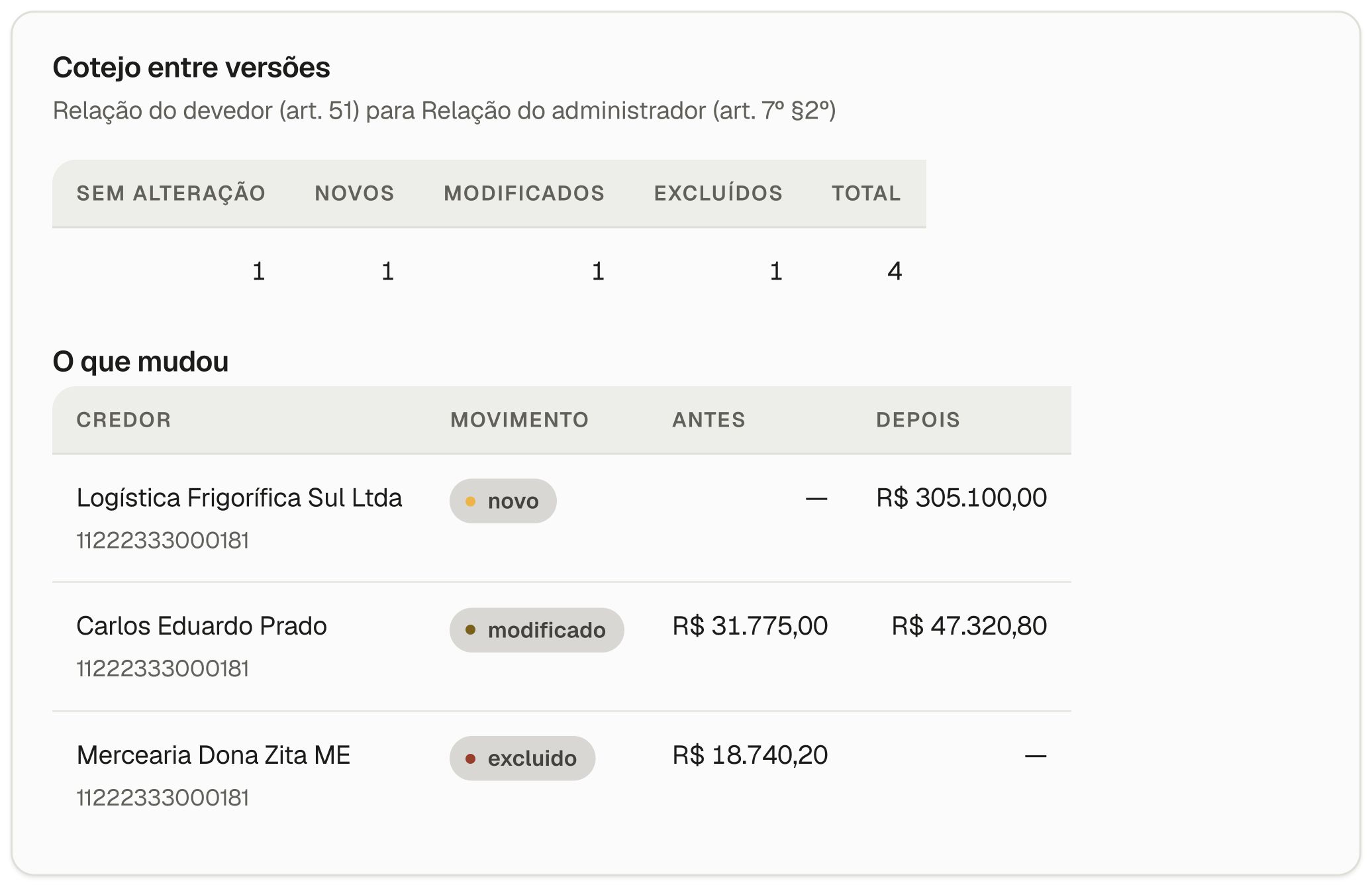
Veja um valor antes e depois, entenda a alteração e confira a referência disponível na relação importada.
Cruza relações de credores, habilitações e documentos para mostrar o que mudou em cada registro.
Mostra diferenças de valor e alterações na composição da relação entre versões.
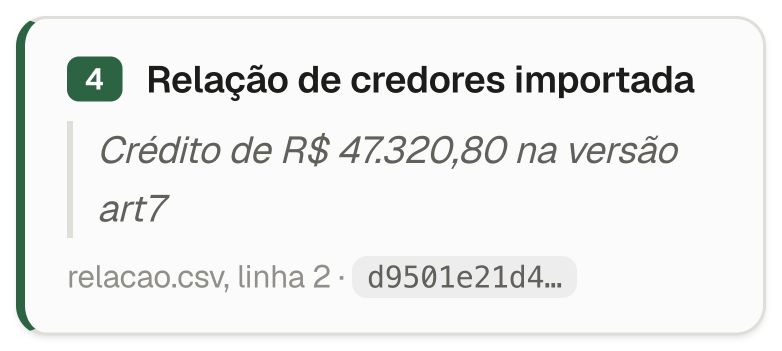
Liga o resultado ao documento, registro ou linha de origem disponível para conferência.
O que o OKI Legal faz
Compare relações de credores, habilitações e documentos de suporte para encontrar diferenças de valores, inclusões e exclusões.
Verifique possíveis vínculos dos credores com o grupo devedor, indicando a fonte consultada e a data dos dados.
Encontre conteúdo oculto e instruções em arquivos PDF e DOCX que podem alterar a leitura automatizada dos documentos.
Como a solução entra no trabalho
Após combinar o canal, compartilhe as relações, habilitações e documentos do caso.
O OKI cruza as versões e organiza as mudanças por credor e valor.
Cada resultado vem acompanhado da referência disponível no material recebido.
Sua equipe confere as diferenças e decide o próximo passo no caso.
No fluxo da equipe
A relação original, as habilitações e as novas versões podem estar em arquivos diferentes. O OKI organiza credor por credor, mostra o que mudou e mantém a origem disponível para revisão.
A tecnologia organiza. Sua equipe revisa e decide.
Antes de conversar
É uma solução para administradores judiciais compararem relações de credores, habilitações e documentos em recuperações judiciais.
Converse sobre o caso e informe o tipo de documento e o volume aproximado. A proposta define os materiais e a forma de trabalho.
Uma comparação com diferenças de valores, inclusões e exclusões, além das referências disponíveis para revisão.
Relações de credores, habilitações, planilhas, PDFs e documentos de suporte podem fazer parte do trabalho.
A proposta considera os documentos, o volume e o tipo de conferência do caso.
A solução apresentada é para recuperações judiciais no Brasil.
Próximo passo
Diga se precisa comparar créditos, verificar vínculos ou examinar documentos e informe os tipos de arquivo, o volume aproximado e o prazo desejado.
Não envie documentos reais, nomes de credores, dados pessoais ou informações confidenciais neste primeiro contato.